
01 / PushT
5.79×FAST loader vs Lance
Separate image matching from object completion.
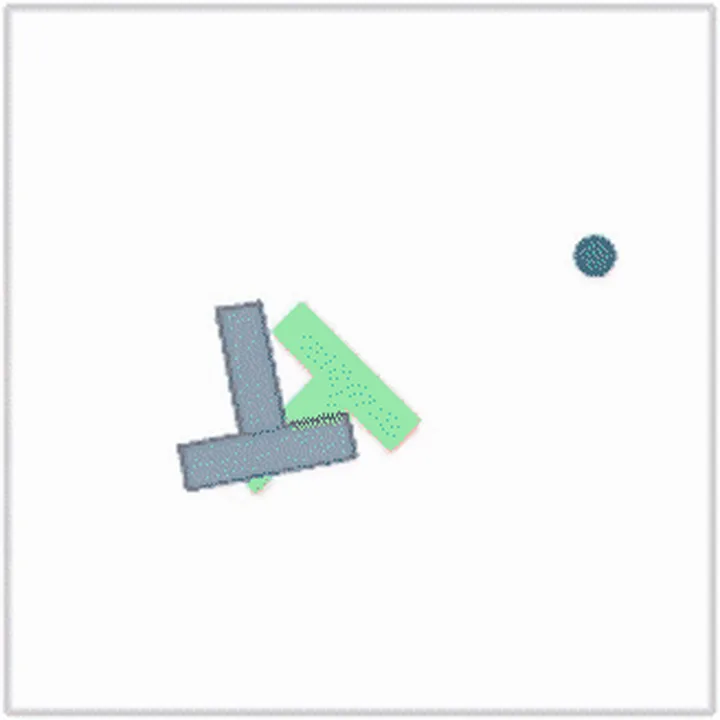
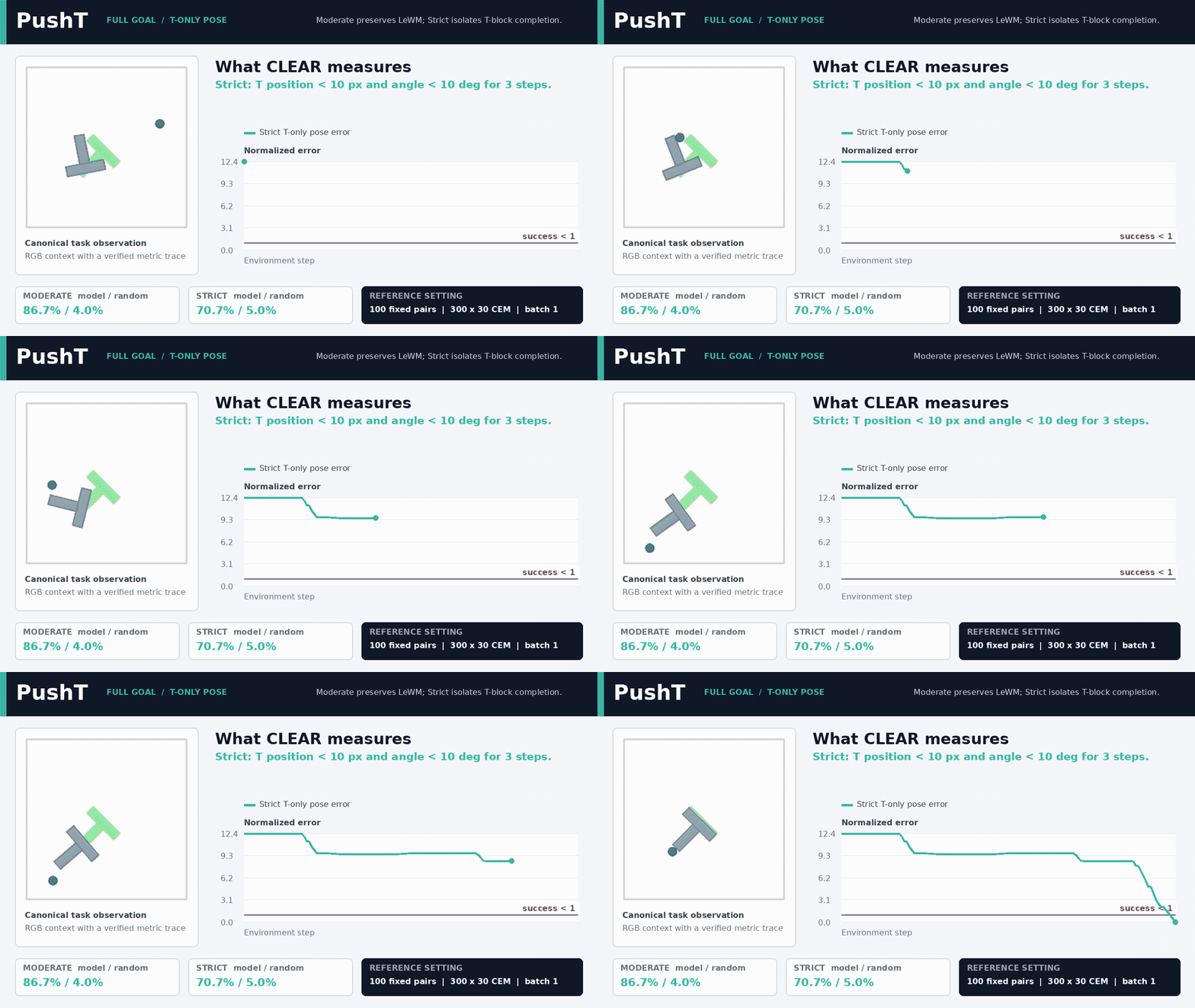
Moderate keeps the full goal state. Strict scores only the T at 10 px / 10 deg for three steps.
Read the task contractA task-semantic evaluation suite for LeWM
Task completion, not proxy success.
Versioned task contracts remove pre-solved pairs, repair demonstrated physics defects, and keep success aligned with each task's official meaning.
At a glance
See how one corrected benchmark supports
both compatibility and precise task semantics.
Why CLEAR-LeWM
The historical LeWM evaluator retains initially solved pairs, can terminate Reacher inside dm-control before CLEAR scores the rollout, and includes a TwoRoom collision rewrite that can admit physically invalid transitions.
v0.8 Moderate keeps official task predicates while fixing termination, joint and collision topology, pre-solved pairs, and contaminated TwoRoom windows. Strict inherits those repairs and asks whether the task-relevant object or endpoint is precise.
Audited training I/O
The generic FAST path decodes once into verified row-major memory maps while preserving episode boundaries and complete action chunks. Five to ten paired steady-state rounds ran serially after conversion; all exact-equivalence audits passed. Figures are loader-only.
Read the performance auditRandom-floor audit
Random-policy success rate, mean over three 100-pair fixed manifests per protocol. Lower is better.
v0.8 Moderate + Strict
01
Minimal repair for LeWM-compatible comparison: remove trivial cases, fix Reacher topology, and restore TwoRoom physics.
02
Task-semantic precision: isolate the physical object or endpoint and apply tighter geometry and persistence.
Task corrections
Each evaluator isolates the object, geometry, or route that determines completion and exposes its decision trace for audit.
01 / PushT
Moderate keeps the full goal state. Strict scores only the T at 10 px / 10 deg for three steps.
Read the task contract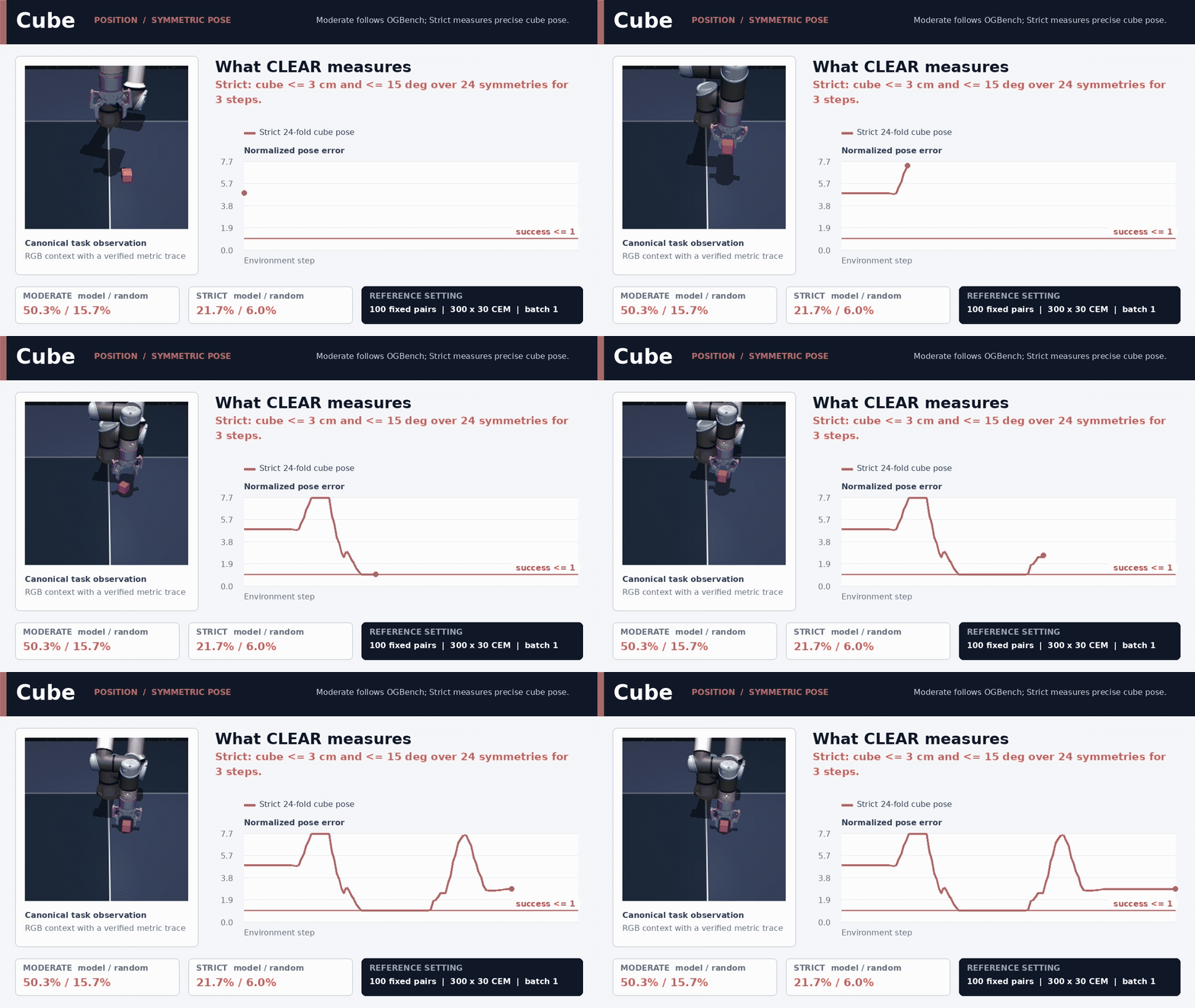
02 / Cube
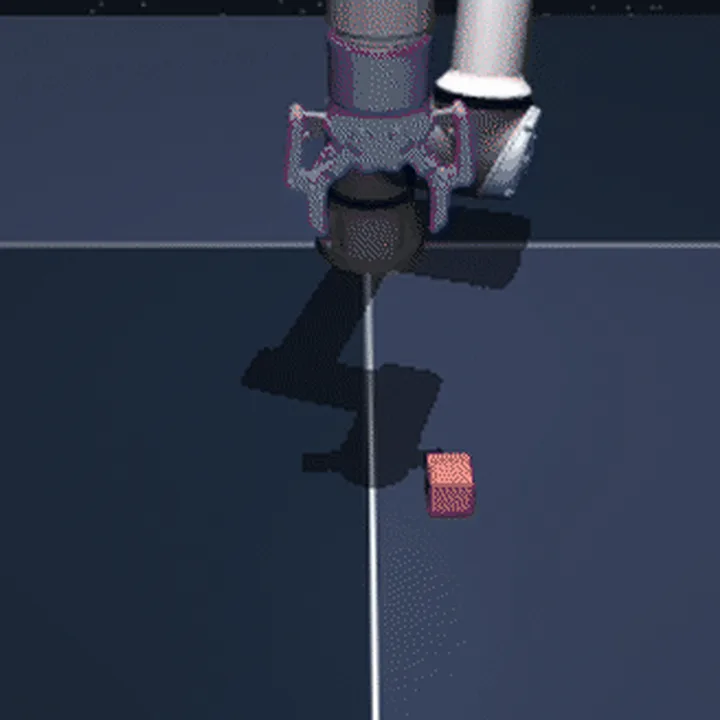
Moderate follows OGBench position. Strict adds 24-fold cube orientation; robot pose is never scored.
Read the task contract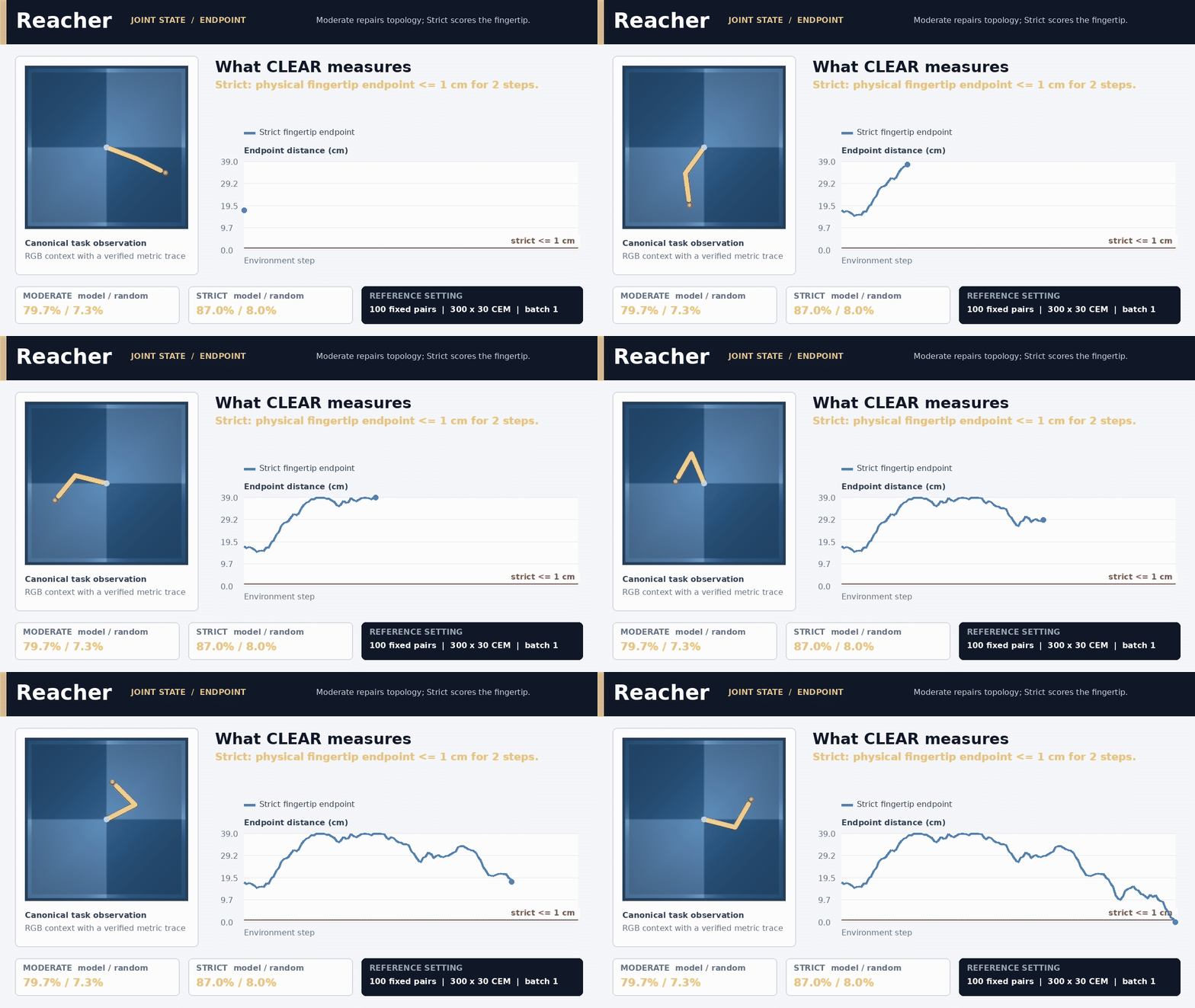
03 / Reacher
Both modes own termination after reset or recompilation. Strict requires the physical fingertip within 1 cm for two steps.
Read the task contract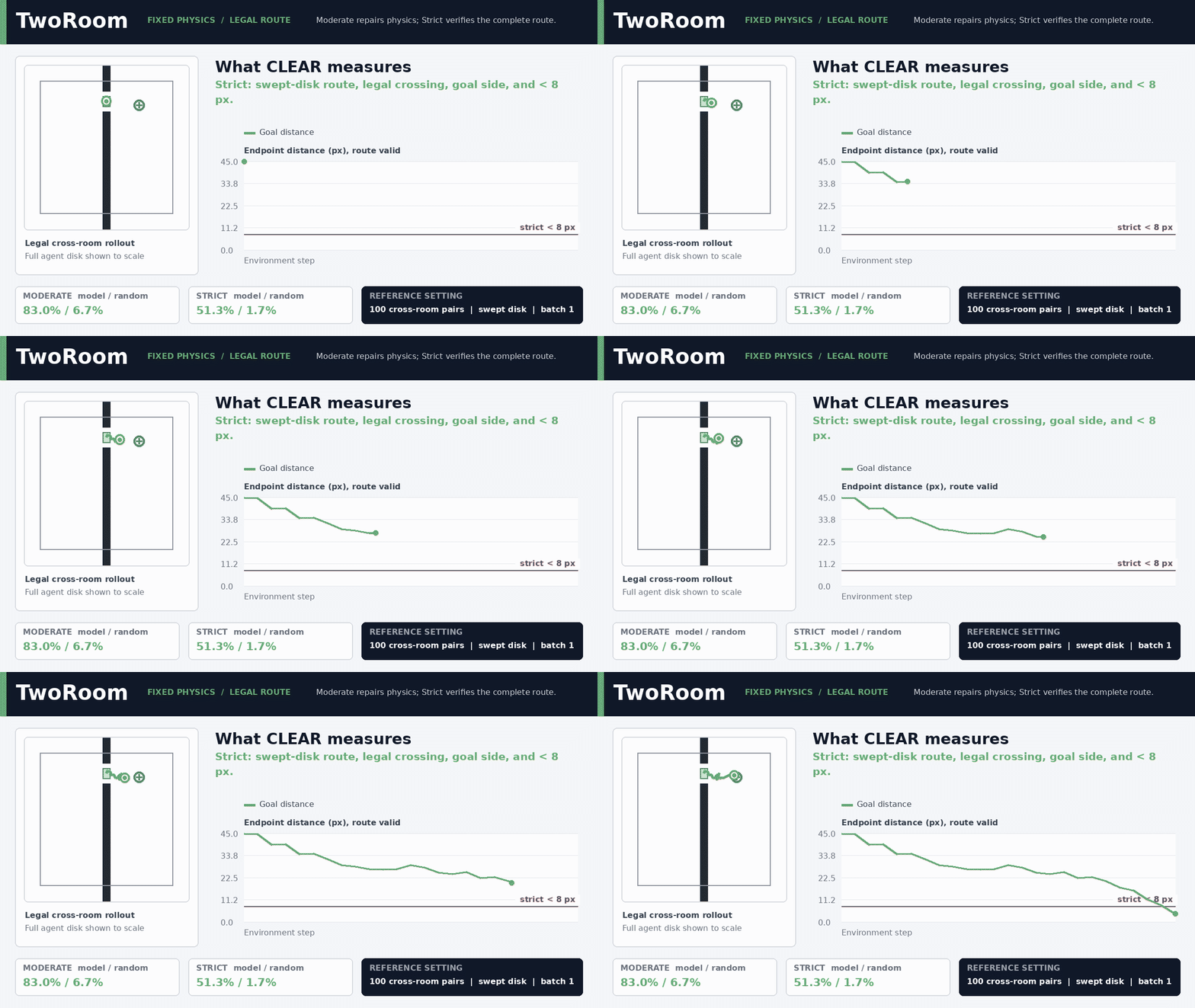
04 / TwoRoom
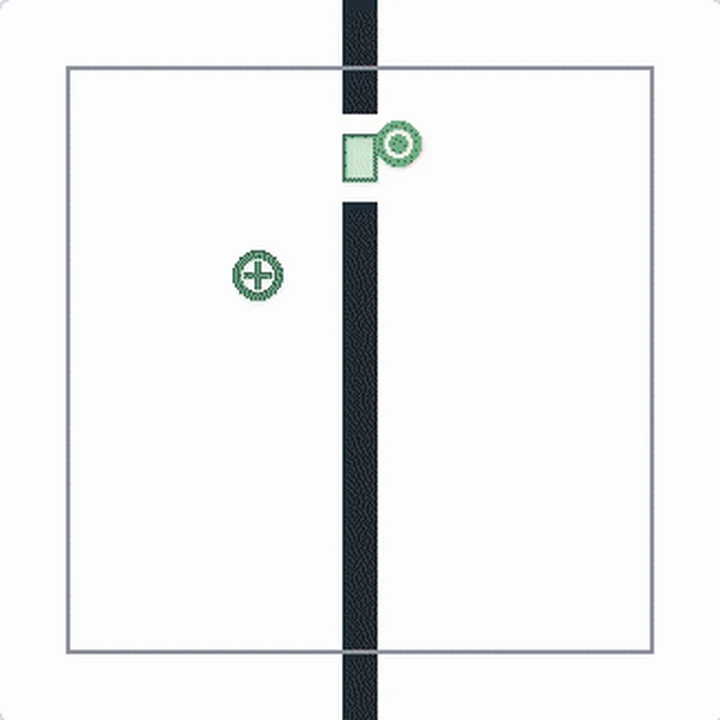
Both modes use clean windows and swept disks. Strict adds route, crossing, goal-side, and 8 px gates.
Read the task contractMatched evaluation
The model comparison uses seeds 0, 1, and 42, 100 episodes each, pure CEM 300 x 30, and solver batch size 1.
Canonical model SR
Loading matched model comparison...
Only tasks submitted by all three models are shown. Reacher remains unreported for both community models.
Official reference
Means over seeds 0, 1, and 42. Each mode retains its own paired-random control.
| Task | ModerateLeWM / random | StrictLeWM / random |
|---|---|---|
| PushT | 86.67%random 4.00%+82.67 pp | 70.67%random 5.00%+65.67 pp |
| Cube | 50.33%random 15.67%+34.67 pp | 21.67%random 6.00%+15.67 pp |
| Reacher | 79.67%random 7.33%+72.33 pp | 87.00%random 8.00%+79.00 pp |
| TwoRoom | 83.00%random 6.67%+76.33 pp | 51.33%random 1.67%+49.67 pp |
Main values are official LeWM SR; secondary values are paired random and excess over random. Full per-seed JSON records are checked into results/v0.8.
Community submissions
Canonical entries use seed 42 and 100 episodes per task and mode. Each bundle is checked by CI but remains self-reported unless independently reproduced.
Loading validated community results...
Cells report model / paired random, followed by excess over random. Missing tasks are never imputed. Submit a result bundle.
Reproduce the score
CLEAR-LeWM is MIT-licensed and ships task contracts, deterministic protocols, provenance records, and automated tests in one public repository.
git clone --recurse-submodules https://github.com/DavidSunok/CLEAR-LeWM.git
cd CLEAR-LeWM
python -m venv .venv
source .venv/bin/activate
pip install -e '.[dev,lewm]'
Open evaluation infrastructure
Versioned criteria keep future model changes comparable to the same physical and task-semantic standard. Cite the repository and protocol version used in your report.